Wednesday, June 9, 2010

Swiss winemakers find heavenly spot near Cape


Hemel-en-Aarde, "heaven and earth", is a region east of Cape Town, South Africa, where two Swiss expatriates produce their own selection of wines.


The last stretch of the drive to the vineyards of Jean-Claude Martin and Christoph Kaser is a reddish-brown dirt road. A gate with the South African flag - and a smaller Swiss one - indicates the entrance to the Creation Wines estate, a few kilometres inland from the quaint coastal town of Hermanus.


It is distinctly cooler here 350 metres above sea level. Yet it is still warm for a winter day in South Africa. The sounds of frogs and crickets from the nearby water reservoir welcome visitors. The scent from the tasting room and a garden around the cellar hangs in the afternoon air.

Ideal conditions for winegrowing and little piece of heaven for 37-year-old JC, as Martin is called by his staff.

“It was love at first sight,” he recalls. He and his Swiss business partner bought the land in 2002.

Sheep were grazing here before the two winemakers decided to turn the virgin land into vineyards. The terroir stretches around between two mountain ranges, which occasionally receive a sprinkling of snow in the cold season.

“Temperatures can also drop below freezing at night on the estate, which is good for the vines. But the weather conditions are stable throughout the year,” says Martin.

The 22 hectares now yield about 200 tons of grapes and an annual output of 120,000 bottles. It is a niche production for South Africa but remarkable compared with Switzerland.

Standing in the middle of the hilly territory of the valley, away from the bustle of the city, the quiet is interrupted only by a farmer’s car on the road in the distance or the hum from a ventilation system in the cellar.


Jean-Claude Martin (swissinfo)


Production


Growing as many as ten different varieties of white and red wines, including sauvignon blanc, chardonnay, pinot noir, syrah and merlot, on a plot this size might not necessarily be best from a commercial viewpoint, Martin acknowledges.

But it’s the quality that counts. “At this stage it is also about finding out what varieties do better than others here,” he explains.

The first wines were only harvested four years ago and in 2009-2010 the estate reached full production levels.

Martin and Kaser know they are in for a long haul as it will take up to ten years before their investment could begin to pay out.

So far there has not been a day when Martin has regretted the decision to leave Switzerland and settle in the country of his South African wife.


Entrepreneur


Martin is aware that he has been taking a risk as a young entrepreneur, but he is confident. “You don’t know how things will work out in the end. But it is important for me to have taken the step and I have a great time here.”

The Swiss is also quite optimistic about the future of South Africa, despite the problems that plague the country.

There’s no denying the huge gap between the rich and the poor and the potential for tensions between blacks and whites.

Martin says by settling in South Africa he has been creating jobs that can feed around 30 families in the area. He employs farm labourers and local staff for the cellar and the wine tasting facilities.

He says he makes no difference between people of different backgrounds. “It is their work that counts.” He says he wants to pay fair salaries and to keep work done manually in the vineyards and the cellar rather than use machines.


Swiss or South African?


Martin says he knows of other Swiss winemakers in the region, but he doesn’t seem to feel a special urge to seek close contact. “We all have our own busy lives and clients,” he says.

He aims for an international market and exports his wine to ten countries. His winery also attracts an increasing number of South African wine enthusiasts who find their way to Hemel-en-Aarde.

He feels a greater degree of independence as a winegrower and entrepreneur in the Cape region than in the closely-knit Swiss society, where projects can be blocked by long administrative procedures and complaints by jealous neighbours, he says.

Martin is convinced that he could go and live in many other places around the world as he finds it easy to adapt to a new environment.

And when it comes to the football World Cup in South Africa he takes a pragmatic view.

“I think my family supports neither the South African nor the Swiss team. Together with our son we will be rooting for Spain.”

Urs Geiser in Cape Town, swissinfo.ch (With input from Stéphane Gabioud, RSR)


Source


If you are interested in visiting Hermanus check out this great Hermanus Guest House and find info on all Hermanus activities.



Wednesday, May 26, 2010

Viewpoints on Whale Watching in Hermanus!

If you're looking to spot a whale, the first few things you'll hear people say is:

"Hermanus has the best land-based whale watching in the world" and "You're sure to see hundreds of whales breaching from the waters off the rocky cliffs to the West" or "You'll definitely see them lob tailing from the vantage point of the golden beaches to the East".

And this indeed is a fact.

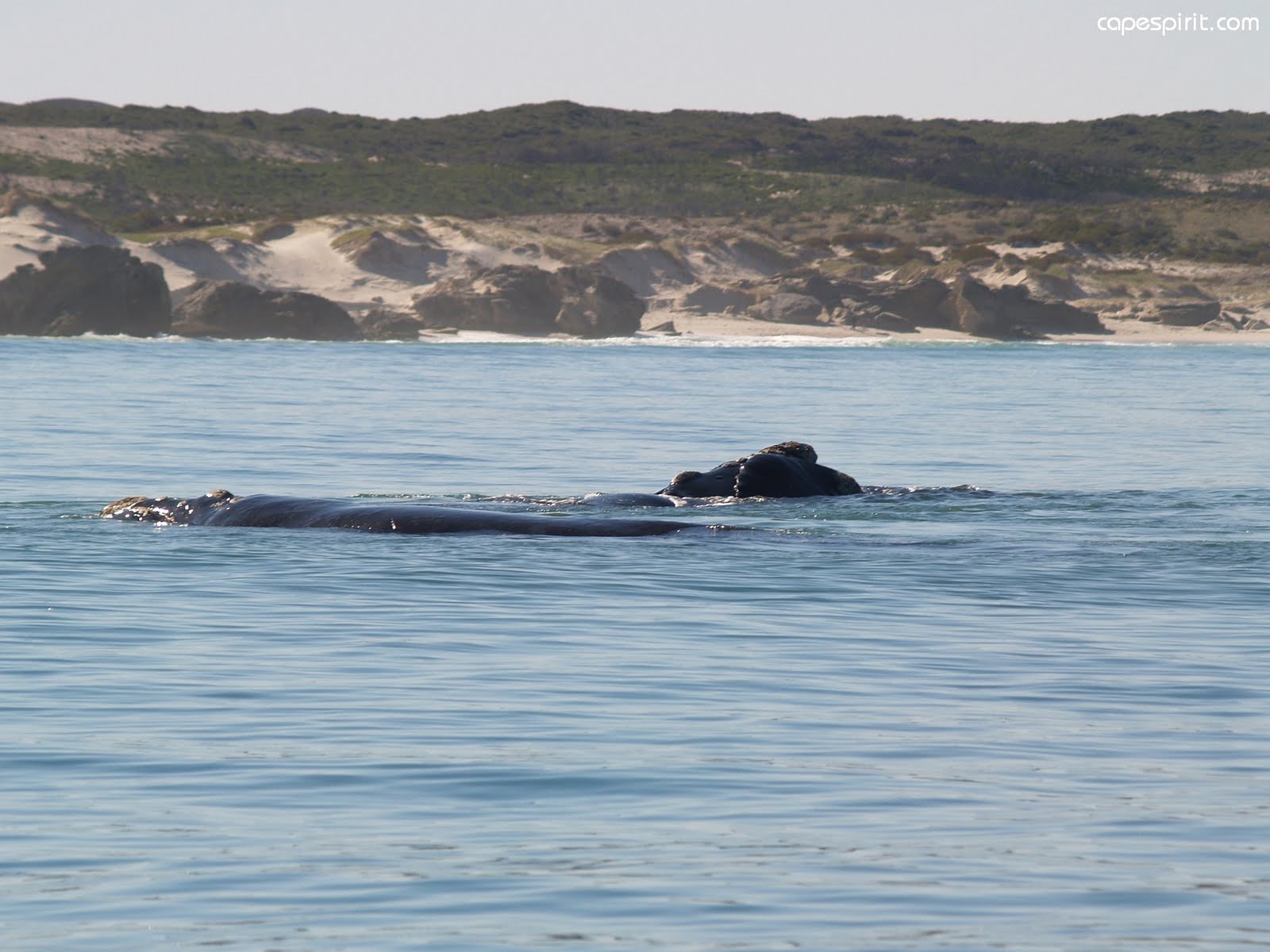
Every year, like clockwork, the whales return to Hermanus for their yearly rendezvous in Walker Bay, carrying out their annual rhythms of mating and calving.

Considering what people actually understand about the Southern Right Whale - named because it was the "right" whale to hunt - the whales perspective will always be something mysterious and unknown.

What we do know is that they prefer the warmer waters of Walker Bay for a breeding ground rather than the cold waters of their usual haunt, the Arctic Circle.

According to the calendar they can be seen from July to November. What areas of Walker Bay or the time of day to expect them is hard to say. But there is one expert in Hermanus who is sure to know.

The Whale Crier of Hermanus

If you've never heard of the Whale Crier of Hermanus, it's because Hermanus is the only place in the world to have one. If you're interested in whales this is one whale expert you definitely need to meet.

Pieter Claasen was the first to lift a horn-shaped tube of kelp to his lips at age 11, sounding the first base notes announcing the arrival of the whales. Since then, his predecessor, Wilson Salukazana, has become Hermanus's second whale crier.

He answers any questions posed to him about whales...

Wilson can tell you where they come from, what kinds there are in the bay and even the names of the aerial stunts they perform. He also knows the best coves along the shore and the places where you can get within 20m of these gentle submariners.

However, his most useful service is a system for notifying whale enthusiasts by coded calls issued from his kelp trumpet.

When he sees the whales on yonder horizon, he blows his trusty horn like he was at home watching a soccer match! And the crowds come running. Two long calls for the viewing spot at Roman Rock. One short call for the Old Harbour, where you can zoom in on the whales with the telescopes provided. One long, one short and another long call for the Voëlklip lookout position.

These are just a few, but there are other spots the Whale Crier claims are even better standpoints for whale watching.

Wilson, the Whale Crier, has many whale tales to tell. If you catch him at the right time, you can hear the legends he has gathered from the past that only he knows how to tell.

The ancient whale migration patterns have remained unbroken for thousands of years...

The Moby Dick Hermanus Whale Festival

Another thing you can count on is the annual Moby Dick Hermanus Whale Festival, happening during the last week of September. Expect things to be in full swing, offering festive greetings to the whales on their return.

The festival is perfectly timed for the spring season and serves as a great way of welcoming back the spirit of springtime for both parties.

The festival centres on the towns market place. Food stalls sell freshly produced foods from the nearby farms, crafters display skilfully made earthenware pottery and assorted trinkets all uniquely crafted by hand. Restaurants bustle with activity and the pubs pour drinks well into the night.

Hermanus is for Everyone

Hermanus is a haven for crafters and musicians, quiet folks and artists. All see its mountains, beaches, wild flora, fauna and of course the whales from their own point of view.

Whether you're gazing at the ocean from the rocky cliffs to the West or marvelling at the sunsets from golden beaches to the East, the friendly people of Hermanus invite you to draw your own experiences.

The Windsor Hotel is situated on a cliff edge just meters form the sea. Providing advantageous perspectives on the Indian Ocean, it was built in 1896 making it the most well-established hotel in Hermanus. The staff at the Windsor Hotel will make your stay a seaside holiday you'll never want to leave behind.

Article Source: http://EzineArticles.com/?expert=Gregory_Hudson


If you are keen for more info on whale watching in Hermanus check out the info at this Hermanus guest house.

Wednesday, March 17, 2010

Great Cape Escapes: Whale Tales in Hermanus, South Africa

You won’t need to hunt as hard as Captain Ahab to find whales in and around the South African seaport of Hermanus; in fact, you won’t even have to leave dry land.

This picturesque town, located about 69 miles southeast of Cape Town, is the center of South Africa’s well-named Whale Coast, which draws hundreds of the magnificent mammals each year between July and November.

The Southern Right Whales migrate from Antarctica to the sheltered waters of Walker Bay to mate, give birth, and raise their calves in deep waters that run near the shore, making Hermanus one of the world’s best places to see the leviathans without getting wet.

Southern Rights are huge (up to 50 feet and 70 tons), frisky and so friendly that they were easily harpooned to the edge of extinction in the 20th century. Now protected, they’ve staged a major comeback—and you can enjoy the show all over town.

On an October visit, my husband and I spotted our first whale waving his tail about 30 feet offshore minutes after we’d parked on Market Square. We saw two more spouting off as we hiked the Cliff Trail that skirts the town. And at dinnertime, one young male whale seemed to breach so close to our window table at Lemon Butta restaurant that we feared we might have to share our tasty curried prawns.

We watched a dozen different whales cavort, including our very own “Great White,” a rare albino who led us out into the wild South Atlantic for a few thrilling rides up and down the 9-to-15 foot waves. About 14 of us on the foredeck clutched the ropes and railings and screamed with delight—and, ok, maybe a little bit of terror. Our “Moby Dick” was kinder than the original, though; after blowing a few bubbles, he guided us back to safe harbor.

Read More

Hermanus Attractions

Hermanus Accommodation

Friday, February 19, 2010

Full Day Hermanus Tour

Leave the city and drive towards the mountains of the wine country before continuing towards the coast. Drive through the seaside towns of the Strand with its beautiful beaches, and Gordon’s Bay nestled below the slopes of the Hottentots Holland Mountains. This is a charming fishing village with magnificent views across False Bay, and on a clear day Cape Point can be seen in the distance.

Continue along the spectacular Marine Drive, which cuts along the mountain slopes and overlooks a precipitous and rocky coast. During the whale season, between July and November, Southern Right Whales are often seen along this drive.

Drive further along the coastline passing the white sandy beaches of Koelbaai and the villages of Rooiels, Pringle Bay and Betty’s Bay. This area has a wealth of flowering plants and one can visit the Harold Porter Botanical Gardens, famous for the beautiful Red Disa and the flowering fynbos of the area. Take a walk through the reserve and up the slopes of the mountains to the waterfall in Disa Kloof where some of the indigenous trees of the Cape can be seen. Continue on, over the Bot River and into the Walker Bay area and the charming village of Hermanus.

For wine enthusiasts a stop is made en route at the picturesque Hemel-en-Aarde valley where the cool maritime climate creates ideal conditions for the growing of Pinot Noir, Sauvignon Blanc and Chardonnay grapes. Here, wine farms such as Bouchard Finlayson, Hamilton Russell and Whalehaven Wines produce acclaimed wines.

Because of its shallow, sandy beaches this area is where many of the Southern Right Whales come to mate and calve. Whales often come very close to the shore in Hermanus, and there are some excellent vantage points from the cliff paths that run from one end of town to the other. After lunch at one of the seafood restaurants in the village, there will be time to browse at the many stores and craft markets in the town.

Return to the city over the Hottentots Holland Mountains, driving through the apple growing regions of Grabouw and Elgin, and stopping on the spectacular Sir Lowry’s Mountain Pass for beautiful views of the Cape Peninsula.

Article Source
Guest House Hermanus

Tuesday, January 19, 2010

Hermanus - The World's Best Whale Watching Destination


Hermanus Accommodation - Bed & Breakfast


Hermanus: the best land based whale watching in the world. Hermanus town looks over the protected shallow waters of Walker Bay where the Southern Right Whales come to mate, calve and rear their young. Between June and December every year you can sit on the rocky cliffs overlooking the bay and watch the whales breaching, sailing, bobbing or just frolicking around in the waves. August is peak time for calving and August and September are the months you will find the most whales in the bay. An incredible site that cannot be missed!


Boat based whale watching is offered from Hermanus where one can get within a few metres from the whales. The Whale Show is offered, a unique whale and dolphin audio-visual presentation that runs twice daily (10h00 & 15h00) at the Whale Museum - A worthwhile show that provides you with detailed, fascinating information on our gentle giants.


Not too far from Hermanus is the Great White shark cage diving mecca, Gansbaai. Six nautical miles away is Dyer Island, possibly the best place in the world to view these magnificent predators. The island is a bird sanctuary and a breeding site for the African penguin and many other coastal birds. Adjoining it is a second, smaller rocky island called Geyser rock, which supports a large seal population. Separating Geyser and Dyer is a channel aptly named "Shark Alley", arguably THE prime spot in the world for encountering the Great White shark. The cage diving is an exhilarating experience and a "must do"


Blue Gum Country Estate kindly invited me to come and stay for the weekend. Accepting the offer with glee, I disappeared from the hustle and bustle of the city driving only 2 hours to arrive in the Overberg region. Blue Gum is situated on the slopes of the Klein River Mountains just outside Stanford only 20min past Hermanus. It offers a luxury country lodge feel, superb service, great food and beautiful surroundings. After arriving in the late afternoon, I was invited to the cosy lounge area to enjoy tea and scones with jam and fresh cream.


Unfortunately I chose the worst weekend to get away. The weather turned really grim and 3 consecutive cold fronts bringing massive amounts of rain, hit the western cape. Thousands of people were left stranded, homes washed away particularly in the poorer rural areas. The Klein River, which Blue Gum Lodge overlooks, came down in flood and completely washed the bridge away between us and the outside world! I must have arrived at about 16h00 and by 17h30 water rushed over the bridge preventing the remaining guests from joining us for the night. They were forced to retreat to Stanford.


Rain belted down during the night, thunder and lighting created a dramatic atmosphere. The guests huddled inside around large cosy fireplaces after a great 3-course dinner, the friendly staff offering nightcaps. I got chatting to a fun English couple, Douglas and Nicky who were visiting the area hoping to go Shark Cage diving. Much to their disappointment this was called off due to the bad weather. Douglas was celebrating his 40th birthday this day so we enjoyed a couple drinks over a game of Trumps, a card game introduced to us by Douglas. Louise the lodge manager joined us and merrily served us more and more tequilas and Jagermeister as the night went on. I retreat to my luxury spacious room before things got too out of hand!


In the morning we heard about a back route out from the lodge to Stanford that travelled through farmlands at the base of the mountain, a rough gravel road crossed by 3 little rivers that tested our off road driving skills in our low laying city cars. Nic, the owner of the lodge, led the way in his pickup truck assisting us where possible. The largest river at one point was approximately 25cm deep at its deepest point and about 6m wide, all very well if you were driving a 4x4, but most of us weren't! After a couple of knocks and bumps and much adrenalin racing through our bodies, we made it! Only to return again later in the afternoon once we had enjoyed our days excursions.


Blue Gum offers a number of activities although all weather dependant, such as horse riding, mountain biking, quad biking, tennis, hiking and boat cruising on the Stanford River. The Birkenhead Brewery is just down the road. From Wednesday to Friday at 11h00 and 15h00, one can enjoy a tour of the brewery and learn how the beer is made. The tastings can be enjoyed everyday at the restaurant and it is nice to combine it with a pub lunch. After enjoying the good service at Blue Gum, I was disappointed with the service here though.


I returned to the lodge for an afternoon nap, happy to see that the rivers had subsided a bit making the road a little less of a challenge. At 18h00 I awoke with a knock on my door. Delicious snacks and an aperitif were brought to me. What a nice surprise! I sat in the quietness of my room enjoying cheese and biscuits and fresh fruit served with white sherry while looking onto the beautiful Klein River Mountain.


Although Blue Gum Lodge is a lovely place to get stranded, we were all hoping that the rain would ease off. If more rain fell, even the back road would become a problem. All the rivers subsided nicely by the morning, I checked out and said my farewells to everyone at the lodge and commenced my journey home.


Article Source

Thursday, November 19, 2009

Why Do Many People Go To Hermanus For Whale Watching

Many visitors tour to Hermanus for the whale scrutiny opportunities free by this quaint coastal civic. The form of whale that can be spotted in Hermanus is known as the Southern Right Whale. The origins of its name are a little unfortunate, as hunters named it who termed it the 'right' whale to hound because it's an unhurried swimmer and its whimper makes it soar even after being killed. The good gossip is that the Southern Right Whale population is now emergent at a grade of about 7 percent every year, meaning that its population doubles every 10 years.

These types of whales normally have bleak grey bodies and colossal heads, measuring up to a third of their bodies.

Why Do the Whales Like Hermanus? Hermanus cataract along the 2000 km's of whale scrutiny territory on the coast of South Africa that are archetype for the whales' desires. The shallow waters and dirty bottoms present an anodyne shelter for mating, calving and attention their childish.

Why Would You Like Hermanus? Hermanus offers a diversity of behavior to scrutiny whales and many of other activities to compliment a whale scrutiny holiday. There are a many coves, with charming slighter beaches stagger linked that-behavior running along the coast. The gives you the options of relaxing walks to scrutiny whales, or if that's too much activity, you can always clasp with a blanket and some lavender on the shoreline or eat at the restaurant in the harbour while you peer out at the sea.

If study from the land keeps you too far away from the Southern Right Whale's, you could also take lead of the ship trips that are existing to take you out to sea. Experiencing guides can chat you through a whale viewing experience, and convey you as close as is doable lacking actually disturbing the whales. The whale festival happens around the 25th of September for a week every year, when many group to the city to blackhead the visiting whales.

Other Activities In Hermanus offers a variety of other charms. The city has become fully a general tourist point, without expanding too much. As a result there are a vary of fantastic restaurants and shops to keep you busy on days when the whales are hiding. Various mountain trails and hikes recommend some activity that could give you a wholly different panorama of the ocean as well, with walks in the Hermanus keep proving particularly prevalent. While the township can't allege to have many of options in terms of nightlife, there are several clubs and pubs to keep you entertained if you are that way inclined.

Hermanus has an established history of being a whale scrutiny position and lovely leave get away. The innate splendour and relaxed sea-margin offerings are enough cause to go there, with the whales' present an bonus, albeit entirely a large one!

Article Source

Hermanus Accommodation


Monday, October 26, 2009

Hermanus Information - Cape Town - South Africa Travel

In the 1800s, the shepherd Herman’s Peters made his way to the sea with his livestock and camped there for a few months. Eventually other farmers also brought their livestock here to the area then known as Hermanuspietersfontein, for the summer grazing months. However, it was the fishermen not the farmers who settled here.

In the early 1900s the long name was reduced to Hermanus. The first school was built is 1868.

Hermanus grew in popularity as a holiday destination, and was even recommended as far afield as England as a good place with its fresh air for convalescents. The Marine Hotel was built in 1902 and proved popular with the English gentry.

Hermanus is about 120km or 90 minutes drive from Cape Town. Greater Hermanus is made up of 8 communities: Hermanus, Fisherhaven, Voelklip, Hawston, Vermont, Onrus, Mt Pleasant, Zwelihle.

Hermanus is regarded as the best land-based whale-watching location in the world. The peak whale season is during September and October. Hermanus hosts the Whale Festival annually. The Southern Right Whale population at Walker Bay was estimated at 40-70 in 2002. The number of whales that visit South African waters is around 2000 and is increasing yearly.

Whales can be spotted anywhere from the 12km long cliff path. Other excellent vantage points are Sievers Punt and Gearings Point. The telescope at the Old Harbour can also be used to view the whales. Wilson Salukazana, the world’s only whale crier patrols the streets of Hermanus with his kelp horn, alerting the town when whales are spotted.

The Whale House, which was created by the Old Harbour Museum, provides information and displays related to whales. The Old Harbour Museum, apart from providing information on the marine history, also maintains a database on the history of Hermanus. For more about the town’s history, a visit to the De Wet’s Huis Photo Museum is worthwhile. Here you can see a photographic exhibition showing the history of Hermanus.

For beer drinkers, a visit to the Birkenhead micro Brewery near Stanford is interesting for tours and tastings.

The abalone industry (perlemoen as it is known locally), is a large and lucrative one in Greater Hermanus. There has been much conflict due to poaching and over-harvesting. Demand for abalone, particularly from the Far East, is high, and dried abalone prices are extremely high. Regulations have reduced the perlemoen diving season considerably to protect this shellfish resource.

A beautiful viewpoint is the Hoy’s Koppie. This hill is named after Sir William Hoy, who was once general manager of South African Railways. He often visited Hermanus with his wife, and was so impressed with its natural beauty, that he blocked the plans to extend the Bot River Railway line to Hermanus so that the town would remain unspoilt.

It was discovered by archaeologists that the Khoisan tribes inhabited the Klipgat Cave on the southern part of Hoy’s Koppie, long before Hermanus was established.

The Fernkloof Nature Reserve was established in 1957. It has a rich diversity (1600) of fynbos species. In this reserve alone, spread over 15 square kilometers, 1100 different plant species have been identified, compared with 1500 species in the whole of the United Kingdom! 111 bird species have been recorded. Klipspringer, baboons, steenbok and grysbok can also be seen in the reserve.

Article Source

Hermanus Accommodation - Bed & Breakfast